
D'Altoabaixo
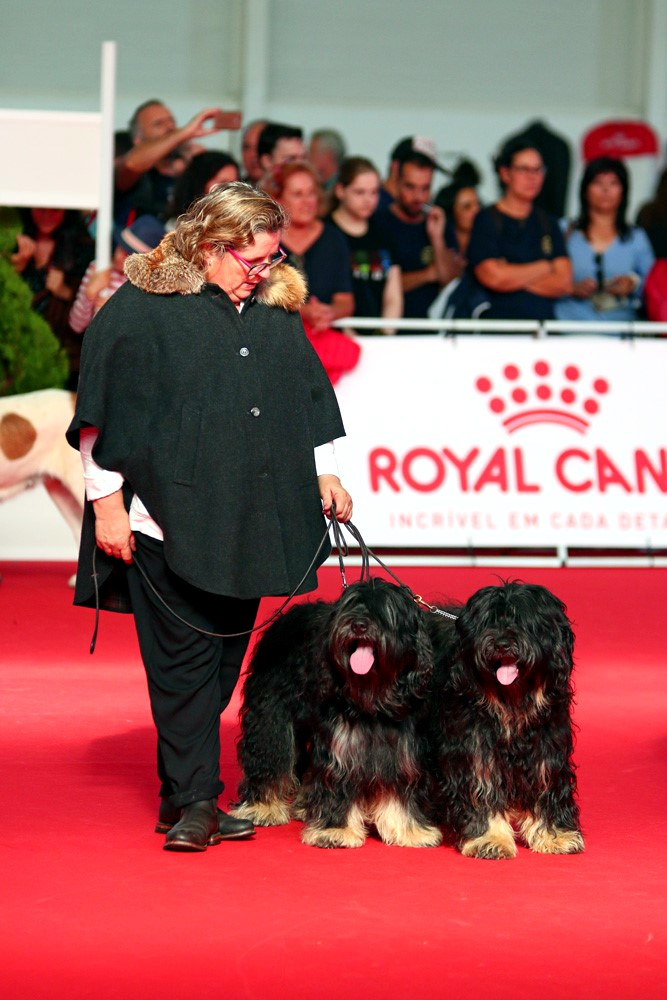
Helena D' Ornellas Cysneiros (Kika)
The Portuguese sheepdog won her over. Captivated, she started a demand for the breed, where the far and the distant became next door, nothing more than the collection of unique specimens, which if lost would lead to the disappearance of a very significant and important part of the history of the Portuguese sheepdog.
In the perception and awareness of what was happening to the breed, despite the difficulties, with the rationality and frontality that characterizes it, he took The Breed as a civic duty to safeguard a rare and precious national genetic heritage.
Her work is fundamentally a work of continuity for decades of improvement of the breed. A work based on specimens representative of the most important lineages of the breed, where the preservation and consolidation of phenotypic, morphological and behavioral characteristics are essential pillars.
A profound connoisseur of the breed, passionate cynophile, with a long and solid experience in caniculture, the crossings he makes, with typical specimens, are properly planned and rigorously selected..
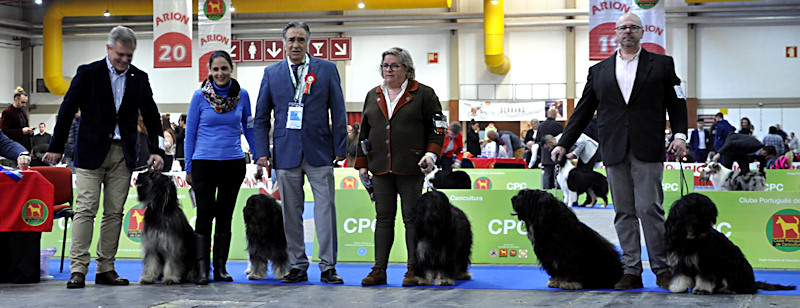
Currently, she is privileging the crossing between specimens of the lines of exposure with specimens of work, thus seeking to preserve the homogeneity of the breed, where the criteria followed by the two lines are not always convergent.
Deep in knowledge of the particularities of the temperament of the Portuguese sheepdog, she dedicates, from an early age, numerous hours to the socialization of her Litters' dogs. Knowing how important the first weeks of life are for building the personality and temperament of dogs, the animals in your Litters are never delivered before 10 weeks of age.
Their dogs are characterized by their intelligence, sociability, dedication and passion for the owner.
Future of the Breed
Recovering
and maintaining representative specimens of the breed was a
concern that guided our behavior towards this
characteristically Portuguese breed. When we started, there
were signs that raised concerns about the future of the
breed, particularly with regard to the preservation of
specimens from the, until then, most representative blood
lines originating from the first recorded specimens, in the
past 50s of the last century.
We decided to
transfer all our breeding knowledge obtained with other breeds,
and we decided to channel this knowledge capital exclusively to
this typically Portuguese breed, so particular and unique.
The work that we
carry out today is based on the experience acquired, but also on
the innovation and knowledge that at the scientific level has
been produced in recent years. In good time, several higher
education and research institutions decided to focus their
attention on Portuguese breeds, in particular those of cattle
(guard) and shepherd (driving).
Scientific knowledge about Portuguese breeds has been increasing considerably. It is for us fundamental and unavoidable support for the work that we are and intend to develop. The specimens we have selected for breeding animals must have requirements that guarantee the propagation of the morphological and behavioral characteristics typical of the breed. Temperament is another aspect that we believe to be an important requirement to preserve and one of the most characteristic and individualizing of The Breed.
Gallery